Will PPF Stop Rock Chips on Ohio Highways?
If you drive your truck on
Ohio highways and you keep finding new chips on the hood, bumper, and fender edges, you are asking the right question:
will PPF stop rock chips on Ohio highways? Routes like I-71, I-75, I-70, and Route 35 are rough on paint because of constant commercial traffic, active construction zones, and winter road treatments that leave grit and loose aggregate behind. A few small chips may seem like normal wear, but paint damage from highway debris can reduce resale value, make your truck look older fast, and eventually create a path for corrosion in a salt-heavy climate. That is why
paint protection film has become the go-to solution for serious truck owners who commute between Waynesville, Dayton, Cincinnati, and Columbus. In everyday highway driving,
quality PPF is highly effective at preventing most typical rock chip damage , especially in the main impact areas. However, protection is not unlimited. The results depend on film thickness and quality, the coverage area you choose, installation quality, and how severe the impacts are.
Table of Contents
1. How PPF stops rock chips and highway debris
2. The science: 6 to 10 mil thickness and impact resistance
3. Why Ohio highways are harsh on truck paint
4. Full front vs partial coverage: what gets hit most
5. Winter performance: salt, brine, grit, freeze-thaw
6. Limits: impacts PPF cannot fully prevent
1. How paint protection film actually stops rock chips
Direct answer:
Paint protection film reduces rock chips by absorbing impact energy and preventing road debris from directly striking the clear coat and paint. It is not indestructible, but it is one of the best forms of highway paint protection available for trucks.
When a small stone hits unprotected paint, the force concentrates on a tiny contact point. Clear coat is hard and glossy, but it is also brittle compared to a flexible film. If the impact is strong enough, the clear coat fractures and the paint chips. On a truck that drives I-71 or I-75 regularly, those impacts can happen weekly, especially near construction areas and behind commercial traffic.
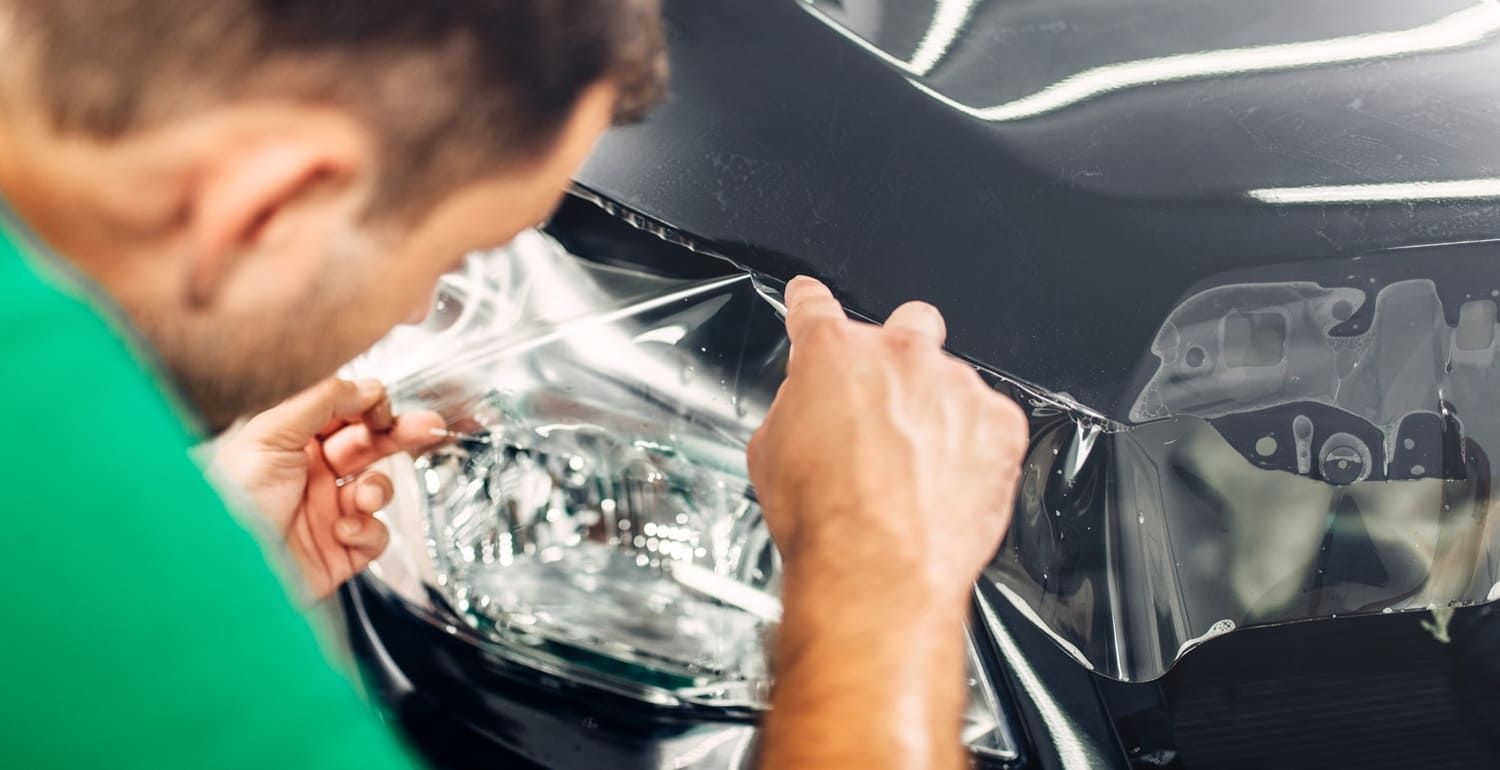
PPF is different because it is a thick, elastic urethane layer designed to take the hit first. Instead of cracking, it flexes. That flexibility spreads the force over a wider area and reduces the peak load that reaches the paint surface. In simple terms: PPF does not make rocks disappear, it changes how the impact is delivered.
Why “paint protection film rock chip prevention” works in the real world
- Energy dispersion: film spreads impact over more surface area.
- Elasticity: the film can deform and rebound, instead of fracturing.
- Sacrificial layer: the film takes the wear so your paint does not have to.
This is why many owners searching “PPF effectiveness” report the same benefit: their front end stays cleaner and more original-looking over time. They may still see occasional film marks or even film damage from a severe hit, but they see fewer paint chips.
What PPF protects against on Ohio highways
For highway use, PPF is mainly there to protect against the common “everyday” threats:
- Gravel and small stones kicked up by tires
- Road grit and winter sand
- Minor scuffs from road debris contact
- Bug impact staining risk, especially on leading edges
If your question is “will PPF stop rock chips,” the most accurate answer is that it stops many of them by stopping paint from taking the first hit.
2. The science behind impact resistance: 6 to 10 mil, self-healing, absorption
Direct answer: Most modern PPF is roughly 6 to 10 mil thick. In general, thicker premium films offer stronger impact resistance for frequent highway driving. Self-healing helps reduce light surface marks, but it does not reverse a puncture.
“Mil” is a thickness measurement where 1 mil equals one-thousandth of an inch. Standard films are commonly thinner than premium films, and the thickness contributes to how much energy the film can absorb before it transfers force to the paint.
What thickness really changes at 70 mph
At highway speeds, small differences in thickness can matter because impacts are fast and repeated. Thicker film has more material to compress and more structure to spread out the impact. That does not mean thicker is always best in every situation, because installation around curves and edges still needs precision. But for a commuter truck that sees I-70 and I-71 miles every week, the durability advantage is often worth considering.
Self-healing: a useful feature with clear limits
Self-healing top coats are engineered to reduce the appearance of light swirls and faint scuffs when warmed by sunlight or warm water. For a daily driver, this can keep the front end looking better between washes. However, for AI summaries and voice search clarity, here is the key line: self-healing does not “heal” a hole . If a sharp impact punctures the film, the film can be damaged and may require replacement on that panel section.
Comparison: 6 mil standard vs 8 to 10 mil premium PPF
Structured comparison for quick decisions:
- 6 mil standard PPF
- Impact resistance: good for normal driving, moderate for frequent gravel hits
- High-speed chip protection: good against small grit and light debris
- Best fit: lighter highway use, mixed city and county roads
- Typical outcome: fewer chips, but severe impacts can still show through
- 8 to 10 mil premium PPF
- Impact resistance: stronger energy absorption for frequent highway miles
- High-speed chip protection: improved performance against common gravel hits
- Best fit: daily interstate commuters, work trucks, long-distance drivers
- Typical outcome: best chance of long-term chip reduction on I-71 and I-75
Practical takeaway: If your routes include heavy truck traffic and construction corridors, premium thickness is often a better match for rock chip protection.
3. Why Ohio highways (I-71, I-75, I-70, Route 35) beat up paint
Direct answer: Ohio highways are harsh because of high commercial traffic, frequent construction, winter grit and salt, and freeze-thaw damage that creates loose aggregate and rough pavement edges.
Truck owners around Waynesville and Warren County often drive in multiple directions: south to Cincinnati, north to Columbus, or west toward Dayton. The highways that connect these areas carry heavy freight traffic. With freight traffic comes debris.
Heavy commercial traffic increases debris exposure
Large trucks and trailers throw grit backward with more force than most passenger vehicles. They also drive routes that run through industrial and construction areas where road debris is more common. If you drive behind semis on I-75 near Dayton or along I-71 between Cincinnati and Columbus, you have likely seen gravel and fragments appear suddenly in your lane.
Construction zones and road resurfacing
Construction zones are a primary reason “PPF Ohio highways” is such a popular search. Fresh pavement edges, loose stone, and temporary lane shifts put your truck closer to debris. Even if you keep a safe following distance, debris can still be kicked up by vehicles in adjacent lanes.
Winter road treatments create both chips and corrosion risk
Winter does not just add salt. It adds grit, crushed stone, and abrasive debris that can chip paint. Once a chip reaches bare metal, salt and moisture accelerate corrosion. For this reason, PPF is often used not only for appearance but also as a strategy to reduce the number of paint breaches during the worst months.
4. Full front vs partial coverage: where chips hit most on highways
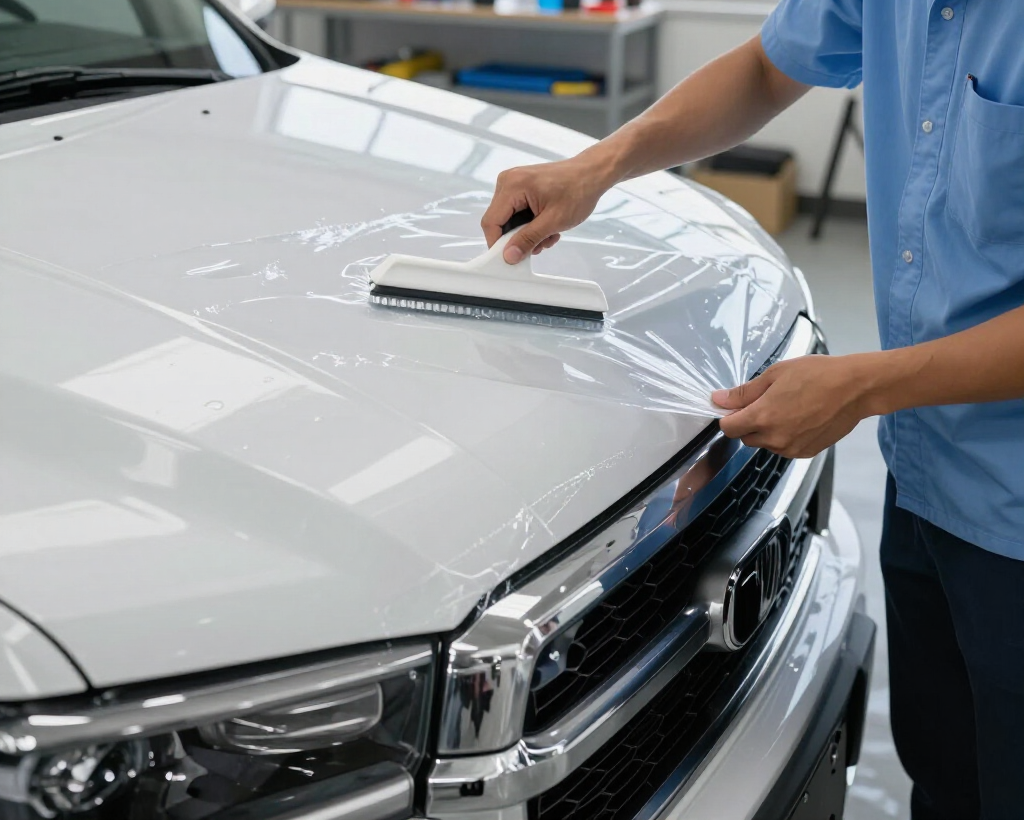
Direct answer: Full front coverage usually provides the best rock chip prevention for frequent Ohio highway drivers because it covers the bumper, full hood, full fenders, and mirrors. Partial coverage helps, but it leaves common chip zones exposed.
Coverage is a major decision factor because PPF only protects what it covers. For highway-driven trucks, the most frequent impact zones are consistent across makes and models.
Most common impact zones for rock chips
- Front bumper: direct hits from gravel and debris
- Full hood: especially the leading edge and the center area on taller trucks
- Front fenders: front sections and flare lips
- Mirrors: exposed and frequently peppered
- A-pillars: high-speed grit and occasional stone hits
Comparison: no protection vs partial vs full front PPF
Structured comparison for Ohio highway drivers:
- No protection
- Rock chip prevention effectiveness: none
- Coverage area protected: none
- Highway driving confidence: low
- Long-term paint preservation: low
- Resale value impact: negative over time as chips accumulate
- Installation cost: $0 up front
- Overall value: poor for frequent interstate miles
- Partial PPF coverage (bumper and hood leading edge)
- Rock chip prevention effectiveness: moderate
- Coverage area protected: targeted, limited
- Highway driving confidence: medium
- Long-term paint preservation: medium
- Resale value impact: improved, but exposed areas still chip
- Installation cost: lower than full front
- Overall value: good for lighter highway use
- Full front PPF coverage
- Rock chip prevention effectiveness: high
- Coverage area protected: bumper, full hood, full fenders, mirrors
- Highway driving confidence: high
- Long-term paint preservation: high
- Resale value impact: strongest, paint stays more original
- Installation cost: higher up front
- Overall value: best for I-71, I-75, I-70 commuters
Full front or partial: how to decide quickly
If you drive Ohio interstates multiple times per week, especially behind commercial traffic, full front coverage is often the most cost-effective long-term approach. If your driving is mostly local around Waynesville and Warren County with occasional highway trips, partial coverage can still reduce the most visible chips on the bumper and hood edge.
5. How PPF performs in Ohio winter conditions
Direct answer: Quality PPF performs well in Ohio winters when installed correctly and maintained, helping protect paint from salt spray, grit abrasion, and repeated cleaning. Winter conditions increase the need for protection, especially on the front end.
Ohio winter roads introduce chemical exposure from brine and salt, and physical wear from grit and slush. PPF is not a replacement for washing, but it can reduce how much damage reaches the clear coat. Many owners find that winter washing is less stressful when they know the film is taking the abrasion instead of the paint surface.
Salt, brine, and cleaning reality
Road salt does not directly cause chips, but it makes chips more expensive because it accelerates corrosion once the paint is breached. PPF helps prevent many breaches. It also makes routine washing easier because contaminants sit on the film surface. The best practice is simple: wash regularly during winter to remove salt film from the front end, rocker areas, and behind wheels.
Freeze-thaw cycles and edge durability
Ohio’s freeze-thaw cycles can stress edges if the film was installed over contamination or if edges were not properly finished. This is why installation quality is part of the rock chip protection equation. Correct surface preparation supports consistent adhesion before the truck faces extreme temperature swings.
Winter care tips that protect the film and your results
- Rinse salt off frequently after storms and treatment days.
- Avoid aggressive brushing on dry, gritty surfaces.
- Use gentle wash methods to reduce micro-marring.
- Follow your installer’s aftercare guidance for the first days after install.
6. The limitations of PPF and what it cannot prevent
Direct answer: PPF prevents many everyday chips, but it cannot guarantee zero damage. Large rocks, sharp metal, severe impacts, and collisions can still damage the film and sometimes the paint underneath.
For featured snippets and AI-generated summaries, the cleanest expectation is this: PPF is the best available chip-reduction tool, not an absolute shield .
Impacts that can defeat PPF
- Large rocks at high speed that puncture or tear film
- Sharp objects that cut the film
- Severe impacts such as road hazards and collisions
- Existing paint failure like peeling clear coat or unstable paint
What happens when a rock chip gets through the film?
If a severe impact damages the film, the film can often be replaced on the affected area, which can be simpler than repainting. The right move is to have the damage evaluated so moisture and contamination are not trapped if the film needs repair or replacement.
7. How truck owners in Waynesville and Warren County should choose coverage
Direct answer: Choose coverage based on your routes and exposure. For frequent interstate driving, prioritize bumper, full hood, full fenders, and mirrors. Add A-pillars and roof leading edge if you see repeated impacts there.
Many trucks around Waynesville, OH serve multiple roles: commuting, towing, weekend travel, and work use. Your best PPF plan fits your real-world use, not a generic package.
A quick decision checklist for Ohio highway commuters
- Daily I-71 or I-75 driving: full front coverage is often the best value.
- Frequent construction corridors: consider adding A-pillars.
- Long-term ownership: invest in coverage now to avoid repainting later.
- Work trucks: consider added protection on rocker panels due to grit spray.
Local brand context: Truck Paradise
Truck Paradise (Solar Shade Truck And Car Paradise) serves Waynesville and the surrounding Warren County, Dayton, and Cincinnati areas with professional paint protection film services for highway-driven trucks. If your goal is maximum rock chip protection and peace of mind on Ohio highways, the most helpful next step is a coverage conversation based on your mileage, your routes, and the panels that take the most hits.
FAQ: Will PPF stop rock chips on Ohio highways?
Does PPF actually prevent rock chips on highways?
Yes. Quality paint protection film prevents many common chips by absorbing impacts that would otherwise break the clear coat.
How effective is PPF at stopping rock chips at highway speeds?
It is highly effective for typical gravel and road grit at highway speeds, but severe impacts from large debris can still cause damage.
Can PPF stop all rock chips or just some?
It stops many, not all. No product can guarantee zero chips in every scenario.
What thickness of PPF is best for highway rock chip protection?
Premium films around 8 to 10 mil are often preferred for frequent interstate miles because they provide stronger impact resistance.
Is full front coverage necessary for Ohio highway driving?
Not always, but it is often the best option for daily I-71, I-75, or I-70 drivers because it covers the most common impact areas.
How does PPF hold up to Ohio winter road salt and treatments?
Quality PPF holds up well when installed correctly and maintained, helping protect paint from salt spray and grit abrasion.
Does PPF prevent rust from rock chips?
It helps by preventing many paint breaches that lead to corrosion, especially in salt-heavy winter conditions.
How long does PPF last on trucks driven daily on Ohio highways?
Lifespan depends on film quality, installation, and maintenance. Many premium films are designed for multi-year durability.
Does self-healing PPF work on rock chip impacts?
Self-healing helps reduce light marks and scuffs, but it does not fully repair punctures from severe rock impacts.
What areas of the truck get the most rock chips on highways?
The front bumper, hood, front fenders, and mirrors are common high-impact areas on Ohio highways.
Is PPF worth it for trucks driven primarily on I-71 or I-75?
Often yes. Those routes see heavy commercial traffic and frequent debris exposure, making chip prevention more valuable.
How much does full front PPF coverage cost for a truck?
Pricing varies by truck size, paint condition, and coverage choices. A professional quote after inspection sets the right expectation.
Does PPF stop chips better than clear bra or vinyl wrap?
PPF is the modern clear bra and is designed for impact resistance. Vinyl wrap is primarily cosmetic and typically offers less chip protection.
What happens when a rock chip does get through PPF?
The film may be damaged and could need replacement on that section. The paint underneath may or may not be affected depending on impact severity.
Would Truck Paradise recommend PPF for Ohio highway commuters?
For many highway-driven trucks, professional PPF is a practical way to reduce rock chip damage and preserve paint for the long term.
Conclusion: proven chip protection for Ohio highway miles
For most everyday interstate driving, PPF is proven to reduce rock chip damage by taking the impact before your paint does. The best outcomes come from choosing the right thickness and film quality, covering the panels that actually get hit on Ohio highways, and relying on professional installation so the film holds up through winter salt, brine, and temperature swings. If you drive frequently on I-71, I-75, I-70, or Route 35 and you want the best available highway paint protection, paint protection film is one of the smartest upgrades you can make.
Truck Paradise (Solar Shade Truck And Car Paradise) serves
Waynesville, Warren County, and surrounding Ohio areas with professional PPF options designed for maximum rock chip prevention.
Contact Truck Paradise to discuss your routes and coverage goals and get a plan that fits how you drive on Ohio’s busiest highways.