What's Better for Ohio Roads: PPF or Ceramic Coating?
Ohio roads put a truck's paint through more punishment than most drivers realize. Between winter road salt, potholes left behind by freeze-thaw cycles, loose gravel on rural routes, and the sand and stone kicked up on I-71, I-75, and I-70, a truck's front end takes a beating in every season. For truck and car owners around Waynesville, Warren County, Dayton, and Cincinnati, the real question isn't whether to protect the paint, it's which protection actually matches what Ohio roads throw at a vehicle.
Solar Shade Truck And Car Paradise, known locally as Truck Paradise, has been serving Ohio drivers since 1979 as the state's largest custom truck and car accessories superstore and its only
LLumar SelectPro FormulaOne Elite dealer. That long history includes plenty of conversations with truck owners trying to decide between
paint protection film (PPF) and ceramic coating. This guide breaks down what each option actually does on Ohio roads specifically, so you can choose the protection that fits your driving, not just a generic product comparison.

Why Ohio Roads Are Uniquely Hard on Truck Paint
Ohio's climate creates a specific combination of hazards that many other regions don't deal with year-round. Understanding these conditions is the key to picking the right protection.
Winter Road Salt and Brine
From December through March, Ohio Department of Transportation crews spread rock salt and liquid brine across highways and county roads throughout Warren County, Dayton, and Cincinnati. That salt clings to a truck's lower panels, wheel wells, and front end, where it can etch into unprotected clear coat and accelerate oxidation if left to sit between washes.
Freeze-Thaw Potholes and Loose Debris
Ohio's freeze-thaw cycle chews up asphalt every winter, creating potholes that kick up loose stone, gravel, and debris directly at a truck's hood, bumper, and fenders. Add rural gravel roads and active construction zones around the region, and the front end absorbs a steady stream of small impacts throughout the year.
Summer UV Exposure and Humidity
Ohio summers bring long stretches of direct sun and humidity that fade paint, break down wax protection faster, and make bug splatter, tree sap, and bird droppings more likely to bond to the surface if not cleaned promptly.
PPF: The Physical Shield Ohio Roads Demand
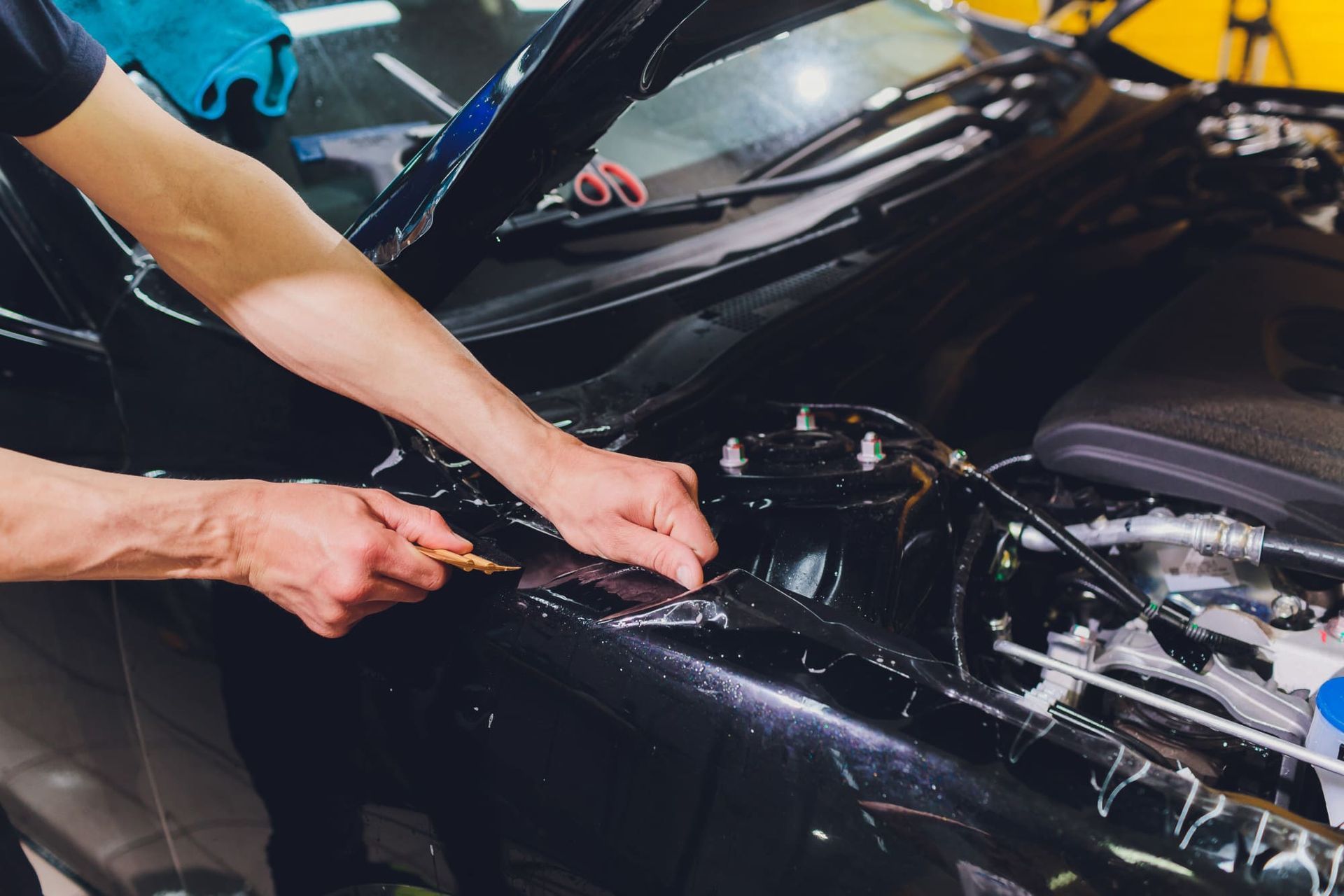
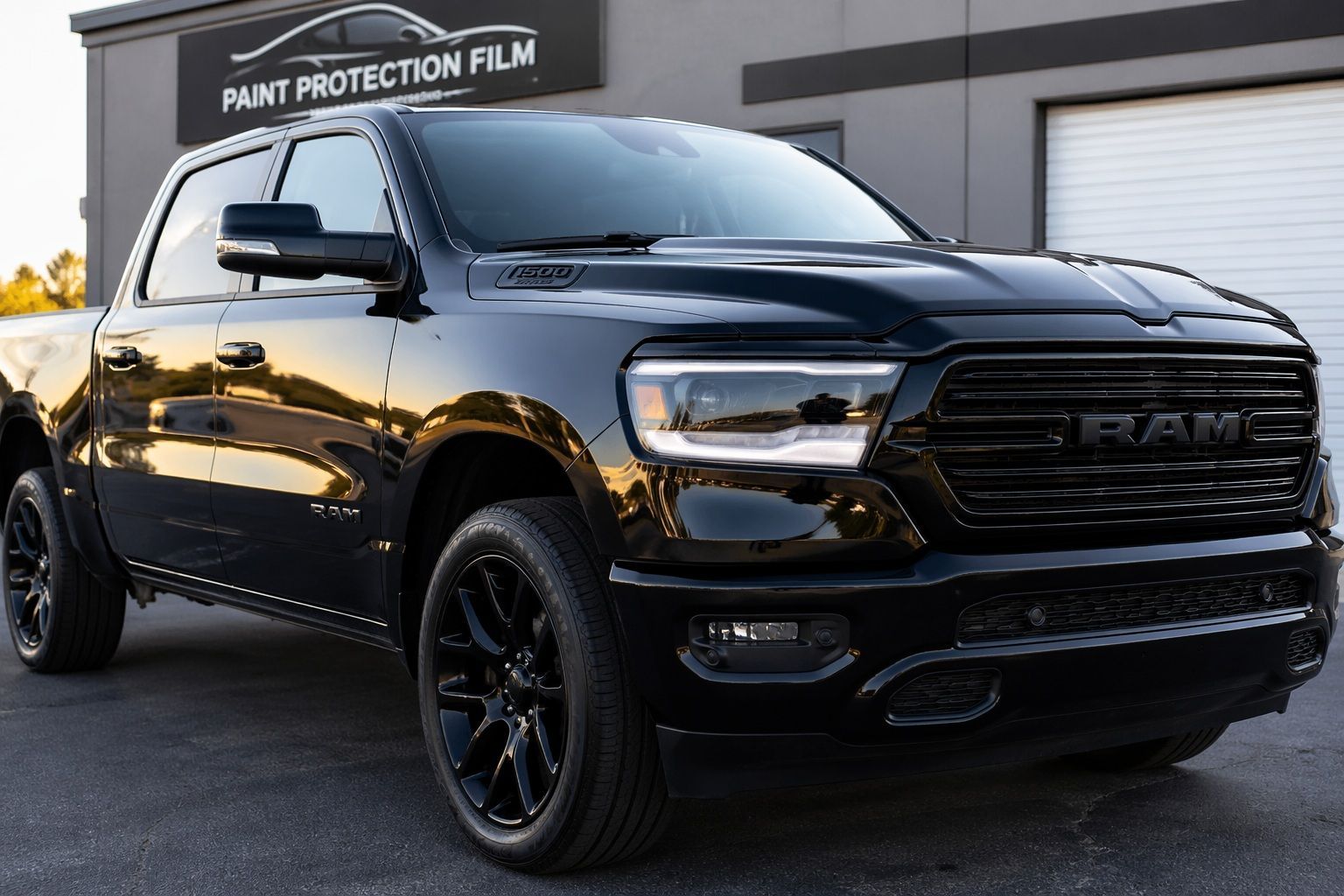
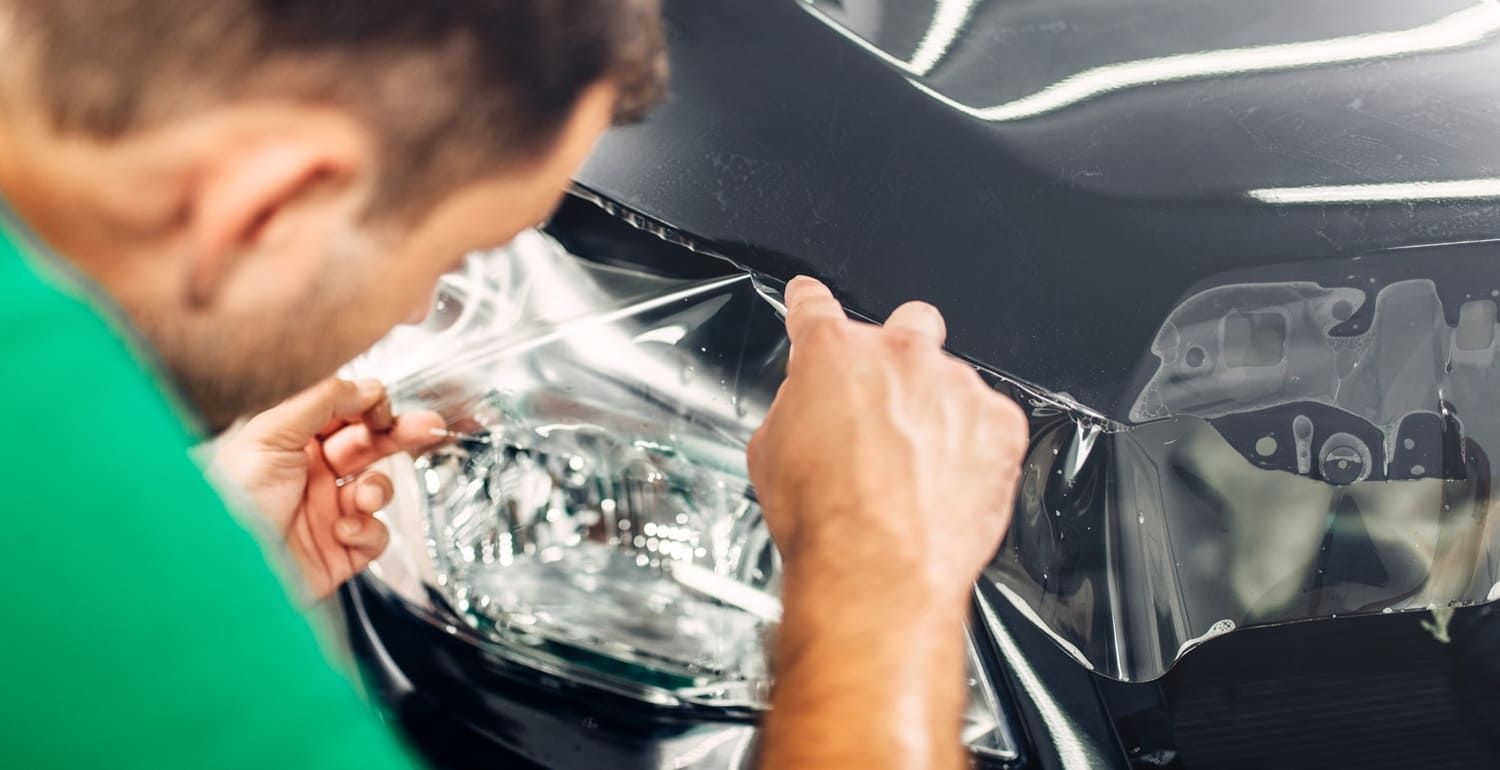
Paint protection film is a clear (or satin) urethane film applied directly to a vehicle's painted surfaces. It functions as a sacrificial layer, absorbing the impact before it ever reaches the clear coat underneath.
What PPF Handles Best on Ohio Roads
PPF is the strongest option against the physical hazards Ohio drivers face daily:
- Rock chips and stone impacts on the hood, bumper, fenders, and mirror caps
- Sand and grit abrasion kicked up from highway travel and construction zones
- Scuffs and light scratches from job sites, gravel driveways, and parking lots
- Minor impact damage behind trucks, trailers, or dump trucks on the interstate
Because it's a physical barrier rather than a chemical layer, PPF is the clear choice for drivers whose biggest concern is preventing visible chips and scratches on the leading edges of the vehicle.
Where PPF Falls Short
PPF does very little to fight staining, water spots, or UV fading. It also won't stop every impact; large, sharp debris at highway speed can still mark the film. And while modern films include self-healing top coats that shrug off light swirls in the sun, that property fades as the film ages.
Ceramic Coating: Built for Ohio's Chemical and Weather Exposure
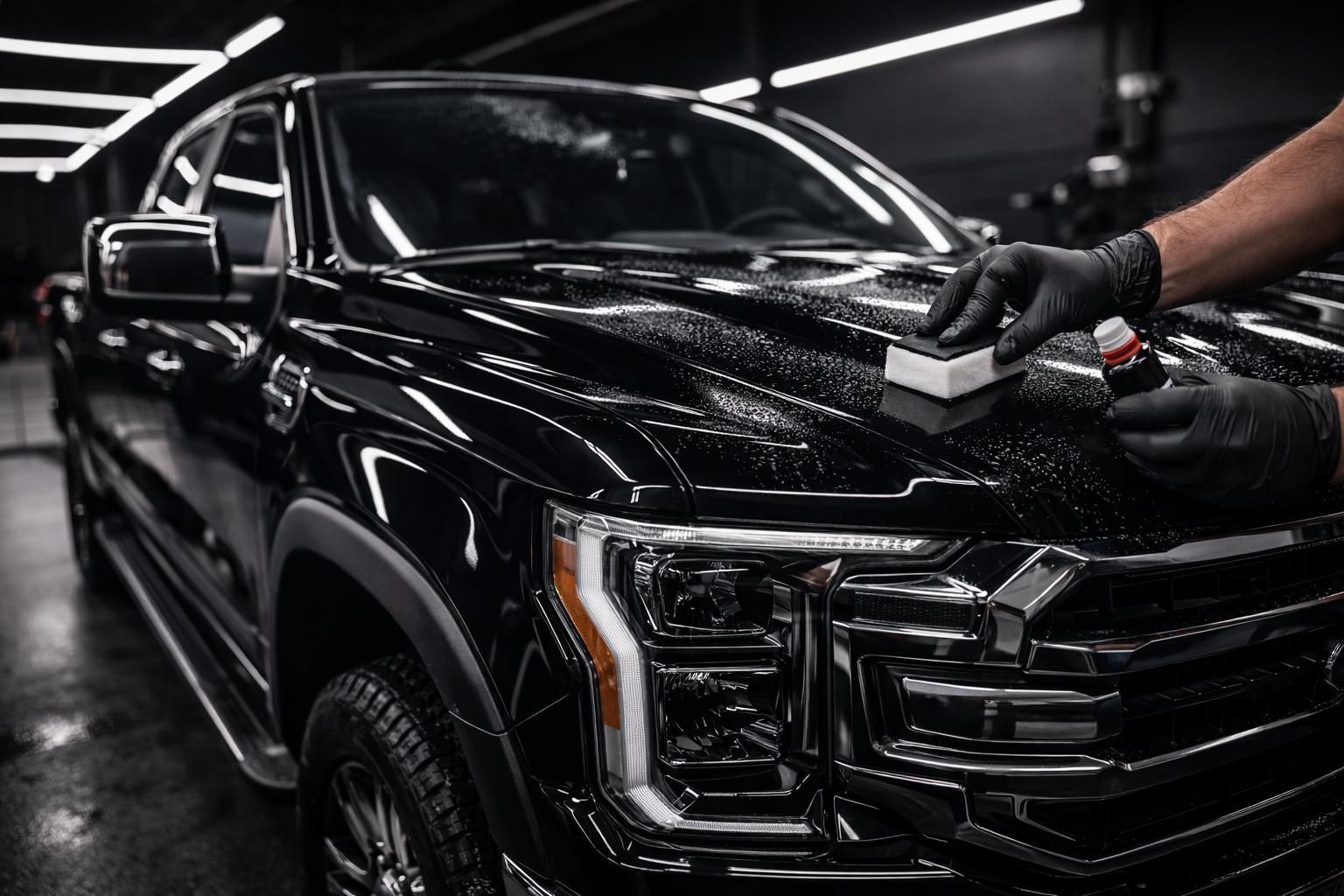
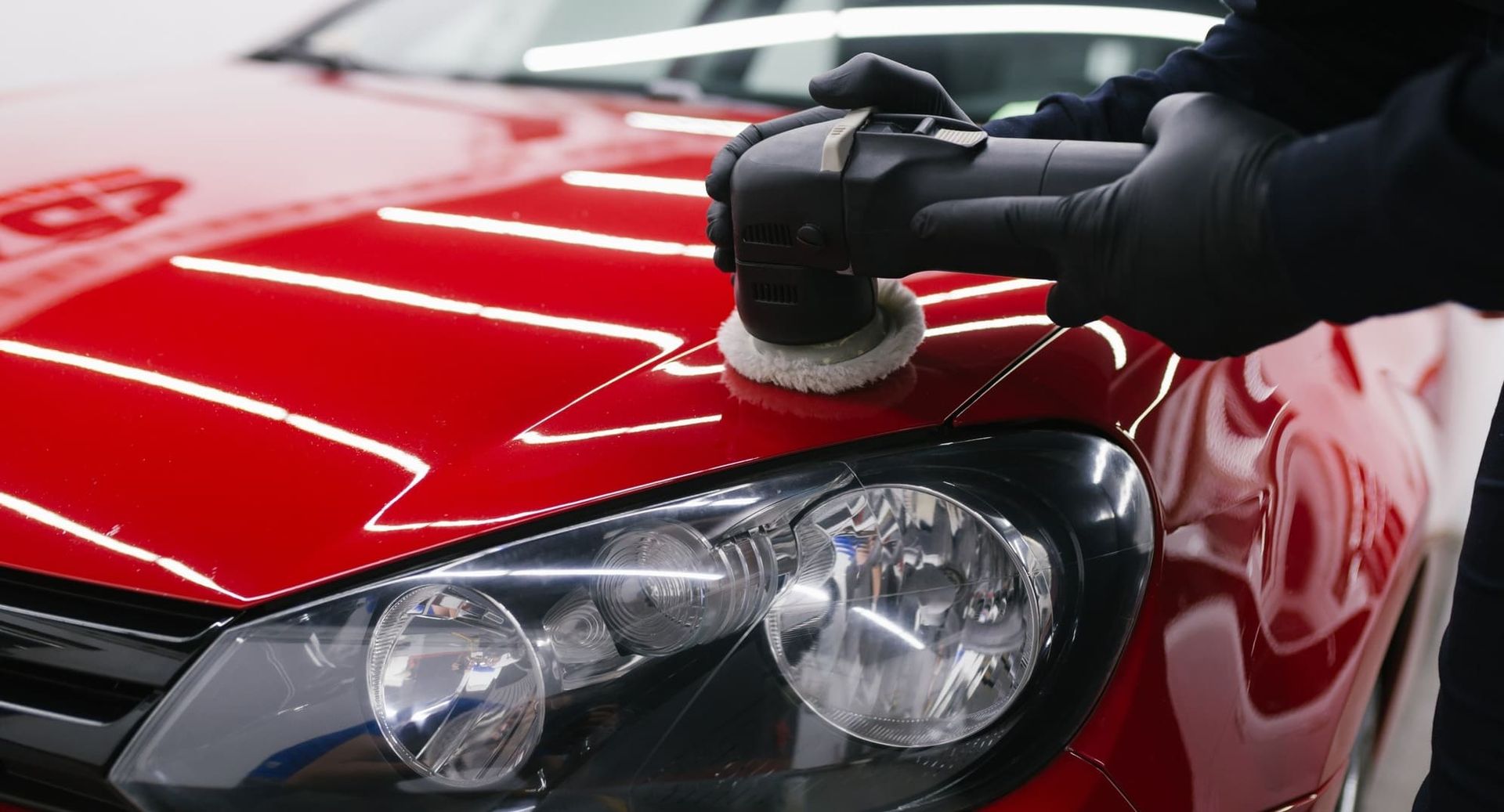
Ceramic coating is a liquid polymer that chemically bonds to the clear coat and cures into a hard, glossy, hydrophobic layer. Rather than absorbing impact, it changes how the surface resists chemicals, water, and UV rays.
What Ceramic Coating Handles Best on Ohio Roads
Ceramic coating is the stronger option for Ohio's environmental and seasonal hazards:
- Winter road salt and brine, which bead and rinse off more easily on a hydrophobic surface
- UV fading and oxidation from long summer sun exposure
- Water spotting and mineral deposits from rain and automatic car washes
- Bug splatter, bird droppings, and tree sap that would otherwise etch into bare clear coat
- Everyday grime that builds up on a truck driven year-round
Where Ceramic Coating Falls Short
Ceramic coating is not built to stop physical impacts. It won't prevent a rock chip on the highway or a scuff from a gravel driveway. It can make the surface slightly slicker, which may reduce very light marring, but it isn't a substitute for a physical barrier when your biggest risk is impact damage.
PPF vs Ceramic Coating: Side-by-Side for Ohio Driving Conditions
| Protection Concern | PPF | Ceramic Coating |
|---|---|---|
| Rock chips & stone impacts | Excellent | Minimal |
| Scratches & scuffs | Excellent | Limited (surface slickness only) |
| Winter road salt & brine | Moderate | Excellent |
| UV fading & oxidation | Moderate | Excellent |
| Water spots & mineral etching | Limited | Excellent |
| Bug splatter, sap, bird droppings | Limited | Excellent |
| Gloss enhancement | Very clear, low profile | Strong gloss & depth boost |
| Typical cost | Higher, labor-intensive | Moderate, prep-dependent |
| Best matched to | Highway commuters, work trucks, gravel exposure | Daily drivers, weekend builds, salt-heavy winters |
For most Ohio truck and car owners, the honest answer isn't "PPF or ceramic coating," it's "which one solves my biggest problem first, and should I eventually get both."
Which Option Fits Your Driving in Warren County, Dayton, and Cincinnati?
If You Commute on I-71, I-75, or I-70
Highway miles mean constant exposure to rock chips and road debris at speed. PPF on the front end, hood, fenders, and mirror caps is the priority here.
If You Drive a Work Truck on Job Sites or Gravel Roads
Job sites bring abrasion, dust, and contamination in equal measure. Targeted PPF on high-impact zones paired with ceramic coating for easier washdowns covers both risks efficiently.
If Your Main Concern Is Winter Salt and Year-Round Upkeep
Ceramic coating's hydrophobic, chemical-resistant properties make winter cleanup faster and reduce how much salt residue clings to the paint between washes.
If You Want the Most Complete Protection
Combining both is increasingly common among Ohio truck owners who want long-term value: PPF absorbs the physical hits on the front end, while ceramic coating protects the rest of the vehicle from Ohio's chemical and seasonal exposure, and can even be applied over the film itself for added slickness and easier cleaning.
Frequently Asked Questions
Is PPF or ceramic coating better for Ohio winters specifically?
Ceramic coating handles winter road salt and brine better because its hydrophobic surface sheds contaminants and rinses cleaner. PPF still matters for the physical debris that potholes and winter road conditions kick up, so many Ohio owners use both together.
Does ceramic coating stop rock chips on Ohio highways?
No. Ceramic coating can make a surface slightly more resistant to light marring, but it doesn't have the thickness needed to absorb rock chip impacts the way PPF does.
Can PPF and ceramic coating be applied together?
Yes, and it's a common approach for Ohio drivers. PPF is typically applied to high-impact areas first, then a compatible ceramic coating is applied over the film and the remaining painted surfaces for full-vehicle protection.
Which option costs more, PPF or ceramic coating?
PPF generally costs more due to the labor-intensive process of patterning, stretching, and aligning film to a vehicle's exact contours. Ceramic coating pricing depends heavily on paint prep and correction needed beforehand.
Do I need both if I only drive locally around Waynesville?
Not necessarily. If your driving is mostly local streets with less highway exposure, ceramic coating alone may deliver strong value for gloss, easier washing, and salt resistance. Highway commuters and work truck owners typically benefit more from adding PPF.
How do I know which one to start with?
Ask what would bother you more: visible chips and scratches on the hood and bumper, or dull, stained paint that's hard to keep clean. The first points to PPF, the second points to ceramic coating.
Get the Right Protection for Your Truck or Car
Ohio roads don't give paint an easy ride, whether it's winter salt, freeze-thaw potholes, or the daily grind of highway debris around Dayton and Cincinnati. PPF and ceramic coating solve two different problems, and knowing which one addresses your biggest risk first is the key to protecting your vehicle without overspending on the wrong solution.
Truck Paradise (Solar Shade Truck And Car Paradise) has helped Ohio drivers protect their trucks and cars since 1979, with expert PPF and ceramic coating services backed by decades of local experience. Visit the shop at 1673 E, OH-73,
Waynesville, OH 45068, or
call (513) 897-1364 to get a
free estimate and a straightforward recommendation based on how you actually drive.