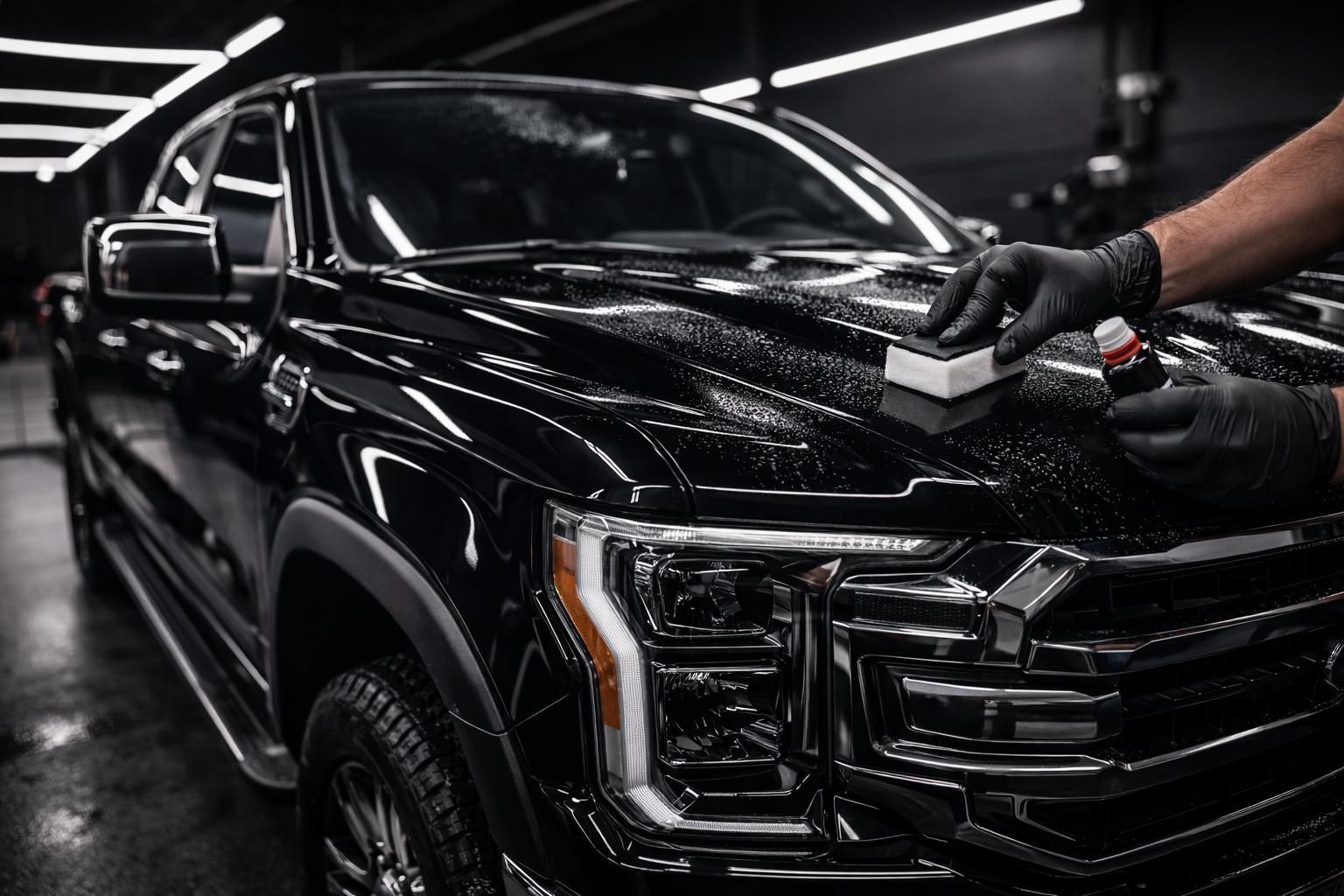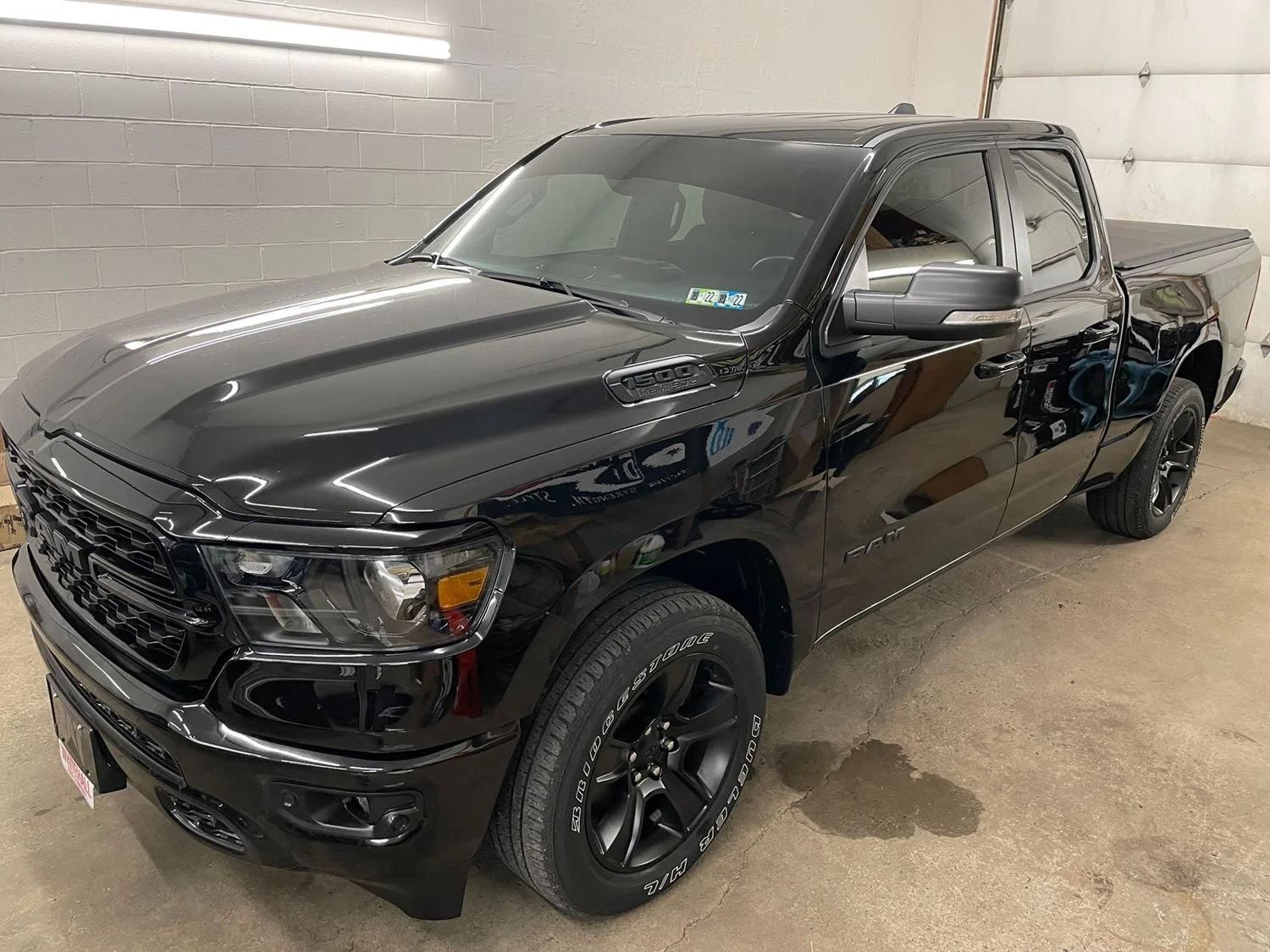
What's the Best PPF for Work Trucks in Ohio? Coverage, Film Types, and Costs Explained
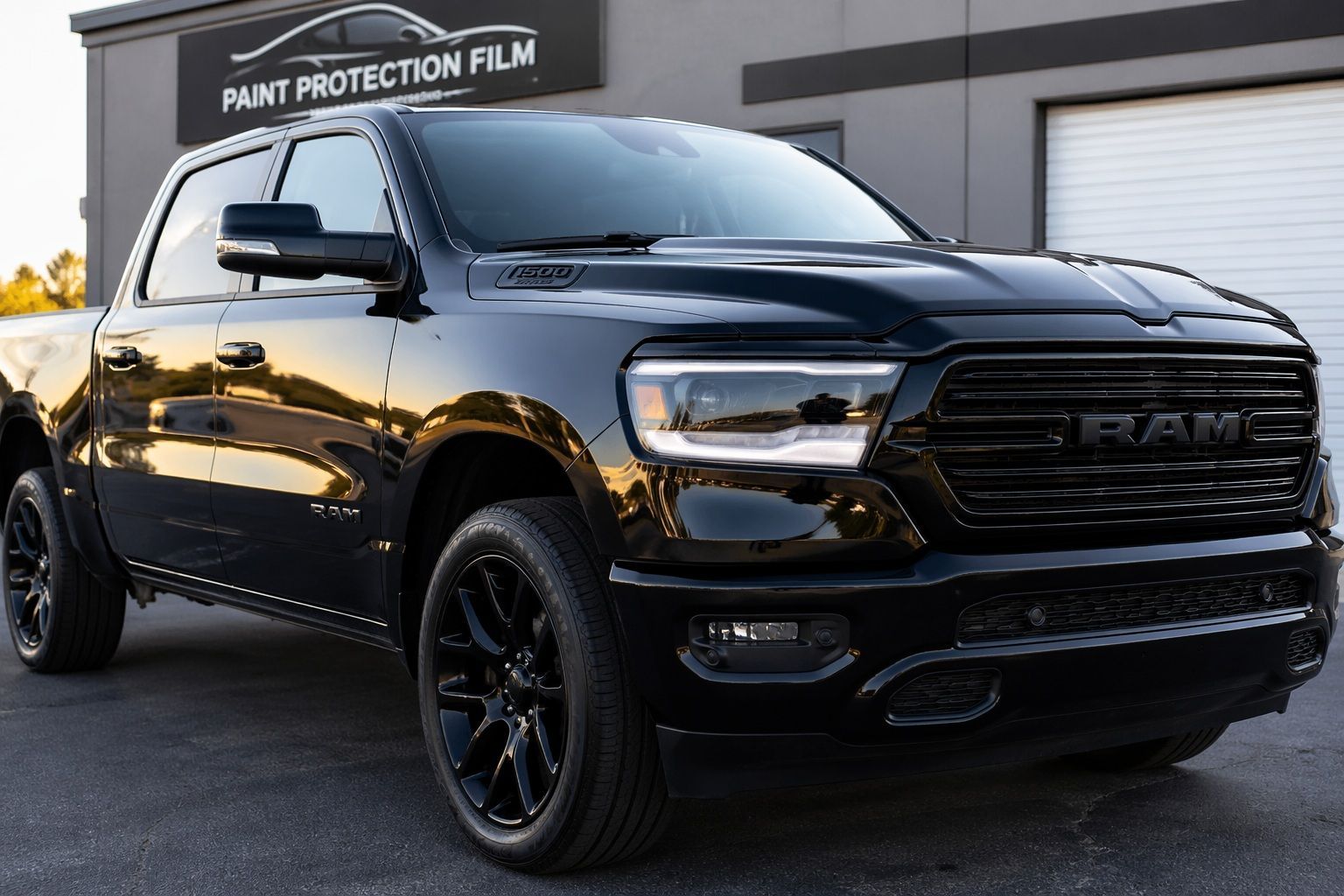
The best PPF for a work truck in Ohio is a thick, self-healing, clear urethane film from an established manufacturer, professionally installed on the areas that take the most abuse: the front bumper, hood, fenders, mirrors, rocker panels, and door edges. The brand name on the box matters less than three things: the film's thickness and topcoat quality, how much of the truck you cover, and the skill of the shop installing it.
If your truck spends its days on job sites, gravel lanes, and salt-covered highways around Dayton, Cincinnati, and Warren County, paint damage isn't a question of "if." It's a question of how fast. A single Ohio winter can pepper a front bumper with chips that turn into rust spots by spring. This guide explains what separates a good work-truck PPF from a cheap one, which panels are worth covering, what it typically costs, and how it compares to ceramic coatings and bedliners.
Solar Shade Truck And Car Paradise in Waynesville has been outfitting and protecting trucks since 1979, so this guide comes from the bay floor, not a brochure.
Why Work Trucks in Ohio Need Paint Protection More Than Most Vehicles
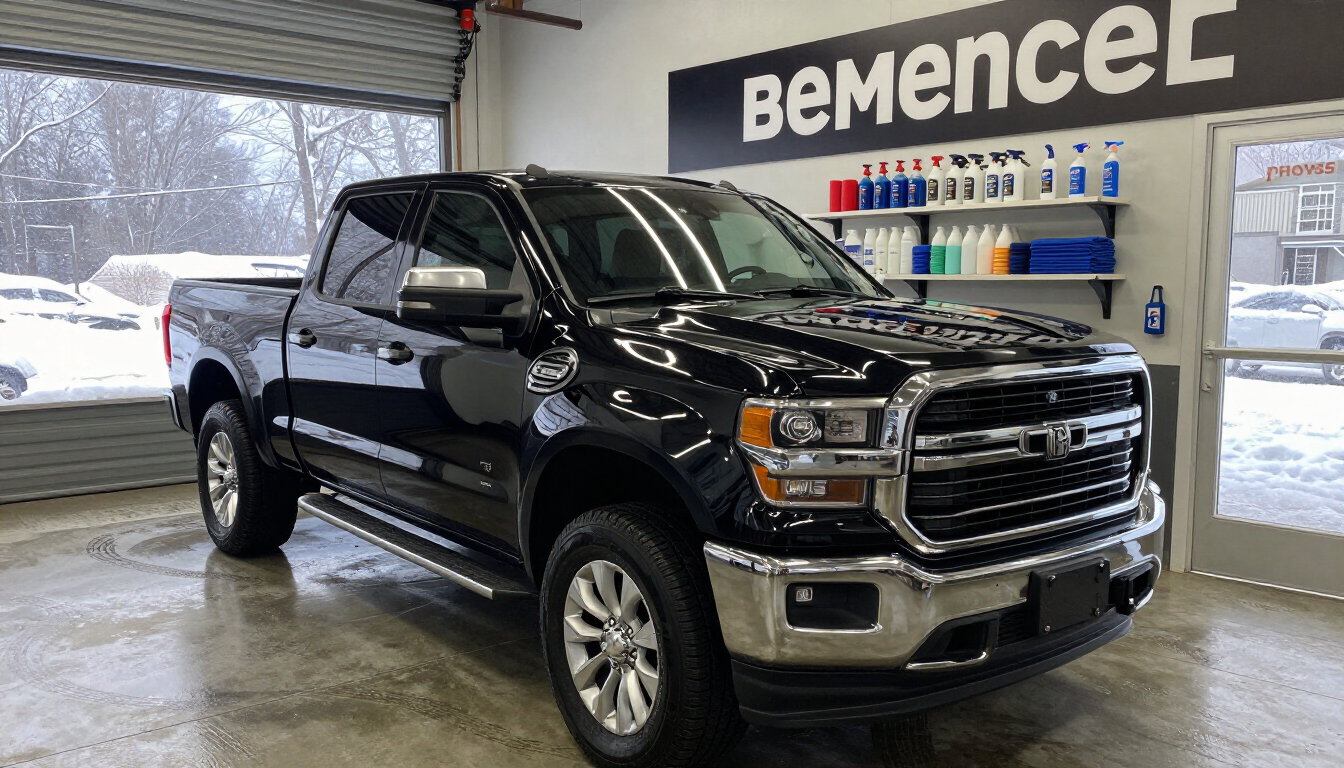
A work truck faces a harsher environment than a daily commuter car. Ohio adds its own set of problems on top of that.
Road Salt, Brine, and Freeze-Thaw Cycles
ODOT and local road crews rely heavily on rock salt and liquid brine from November through March. Salt itself doesn't chip paint, but it finds every existing chip and speeds up corrosion underneath. Ohio's freeze-thaw cycles make things worse. Moisture gets into tiny paint wounds, freezes, expands, and lifts the surrounding clear coat. A chip that was the size of a pinhead in December can become a bubbling rust spot by April.
Gravel, Job Sites, and Rural Routes
Much of Warren County and the surrounding region still runs on chip-and-seal and gravel roads. Add construction sites, farm lanes, and quarry entrances, and your truck is constantly driving through loose stone. Every vehicle ahead of you, especially dump trucks and other pickups, launches debris straight at your grille and hood.
Truck Height, Tires, and Self-Inflicted Rock Chips
Pickups take damage in places cars rarely do. Aggressive all-terrain and mud-terrain tires throw rocks backward into your own rocker panels, lower doors, and the leading edges of the bed. Lifted trucks expose even more lower-body paint. Then there's the daily wear of tools, ladders, keys, and gloved hands around door handles, bed rails, and the tailgate.
What Makes a PPF "Best" for a Work Truck?
Not all paint protection films are built the same. When you compare options, these five factors determine how a film will hold up on a truck that actually works.
1. Film Thickness
PPF thickness is measured in mils (thousandths of an inch). Most quality films fall around 8 mils, and some heavy-duty films run thicker. A thicker film absorbs more impact energy from rocks and gravel, which matters for trucks that run highway miles behind other work vehicles. Thicker isn't automatically better everywhere, though. Very thick film can be harder to wrap cleanly around tight curves, so installation skill matters.
2.Self-Healing Topcoat
Modern premium films have an elastomeric topcoat that lets light scratches and swirl marks disappear with heat from the sun, a warm engine, or warm water. On a work truck, that means brush scuffs, glove marks, and car-wash swirls fade instead of piling up. Self-healing won't repair a deep gouge, but it keeps the film looking clear for years.
3.Stain and Yellowing Resistance
Older and budget PPFs were known for turning yellow and cloudy. Quality films today are formulated to resist yellowing, cracking, and staining from bug residue, tar, tree sap, and road grime. For a truck that may sit dirty for a week between washes, stain resistance is essential.
4.Optical Clarity and Finish
A good film should be nearly invisible on the paint, with no orange-peel texture or haze. You can also choose a matte or satin PPF to give a gloss truck a flat look, or to protect a factory matte finish. Many work-truck owners choose gloss to keep the factory appearance and make resale easier.
5.A Warranty Backed by a Real Installer
Manufacturer warranties typically cover defects like yellowing, cracking, and peeling, but only when the film is installed by a trained, authorized shop. A warranty is only as useful as the installer standing behind it. Ask who handles claims, what's covered, and how long the coverage lasts before you commit.
Standard vs. Premium PPF: How They Compare
| Feature | Budget / Entry-Level PPF | Premium Self-Healing PPF |
|---|---|---|
| Typical thickness | Thinner, varies widely | Around 8 mils or more |
| Self-healing topcoat | Limited or none | Yes, heat-activated |
| Yellowing resistance | Prone to discoloration | Engineered to stay clear |
| Stain resistance | Moderate | High (bugs, tar, sap) |
| Optical clarity | May show texture or haze | Nearly invisible, high gloss |
| Expected lifespan | A few years | Often 7–10 years with care |
| Best for | Short-term, low-use vehicles | Work trucks, daily drivers, long-term owners |
Which Parts of a Work Truck Should You Cover With PPF?
You don't have to wrap the entire truck to get real value. Most work-truck owners choose a package based on how and where they drive.
| Coverage Package | Areas Covered | Best For |
|---|---|---|
| Partial Front | Front bumper, partial hood (about 18–24"), partial fenders, mirrors | Budget-conscious owners, mostly highway driving |
| Full Front | Entire bumper, full hood, full fenders, mirrors, headlights | Most work trucks; eliminates visible film lines on the hood |
| Full Front + Rockers | Full front plus rocker panels and lower doors | Lifted trucks, aggressive tires, gravel roads |
| High-Impact Add-Ons | Door cups and edges, bed rail tops, tailgate, rear bumper top | Trucks loaded and unloaded daily |
| Full Truck | Every painted panel | New trucks, fleet image, maximum resale value |
For most Ohio work trucks, a full front package plus rocker panels gives the strongest protection for the money. It covers the panels hit by highway debris and the lower body sandblasted by your own tires. Door cups and bed rail tops are inexpensive add-ons that prevent the daily scratches that make a truck look tired.
How Much Does PPF Cost for a Work Truck in Ohio?
PPF pricing depends on the truck's size, panel complexity, film choice, and coverage area. As a general industry guide, partial front kits often start in the high hundreds to low thousands of dollars. Full front coverage commonly runs from the low-to-mid thousands. Full-truck coverage on a full-size pickup can reach several thousand dollars or more.
Several factors push the price up or down:
- Truck size. A crew cab long bed has more surface area than a regular cab.
- Bumper and grille design. Complex sensors, sculpted bumpers, and aftermarket parts add labor.
- Wrapped edges vs. exposed edges. Wrapping film around panel edges looks cleaner and lasts longer but takes more time.
- Paint condition. Existing chips or swirls may need correction before film goes on.
The best way to get a real number is an in-person estimate on your specific truck. Solar Shade offers free estimates, and financing is available through Snap Finance for owners who want to spread out the cost.
PPF vs. Ceramic Coating vs. Bedliner vs. Vinyl Wrap
Truck owners often ask whether another product can do the same job. Each one solves a different problem.
| Product | Stops Rock Chips? | Main Benefit | Best Use on a Work Truck |
|---|---|---|---|
| Paint Protection Film | Yes | Physical impact barrier, self-healing | Front end, rockers, door cups, bed rails |
| Ceramic Coating | No | Gloss, easier washing, chemical resistance | Over PPF and remaining paint |
| Spray-In or Drop-In Bedliner | Inside the bed only | Protects bed floor and walls | Truck bed interior |
| Vinyl Wrap | Minimal | Color change, branding | Fleet graphics, appearance |
The strongest setup for many work trucks is PPF on high-impact areas, a bedliner in the bed, and an optional ceramic coating over everything for easier cleanup of mud and salt film. Since Solar Shade also installs bed accessories, bumpers, and other truck upgrades, you can plan protection and accessories together.
How Professional PPF Installation Works
Knowing the process helps you spot a quality installer.
Step 1: Consultation and Inspection
A good shop starts by looking at your truck, how you use it, and the paint's current condition. This is when you choose coverage areas, finish, and film options.
Step 2: Wash, Decontaminate, and Prep
The truck is thoroughly washed and the paint is decontaminated to remove embedded grit, tar, and salt residue. Any contamination left under the film will show forever.
Step 3: Paint Correction if Needed
Swirls and light scratches are polished out before film goes on, because PPF locks in whatever is underneath it.
Step 4: Custom-Cut Film Application
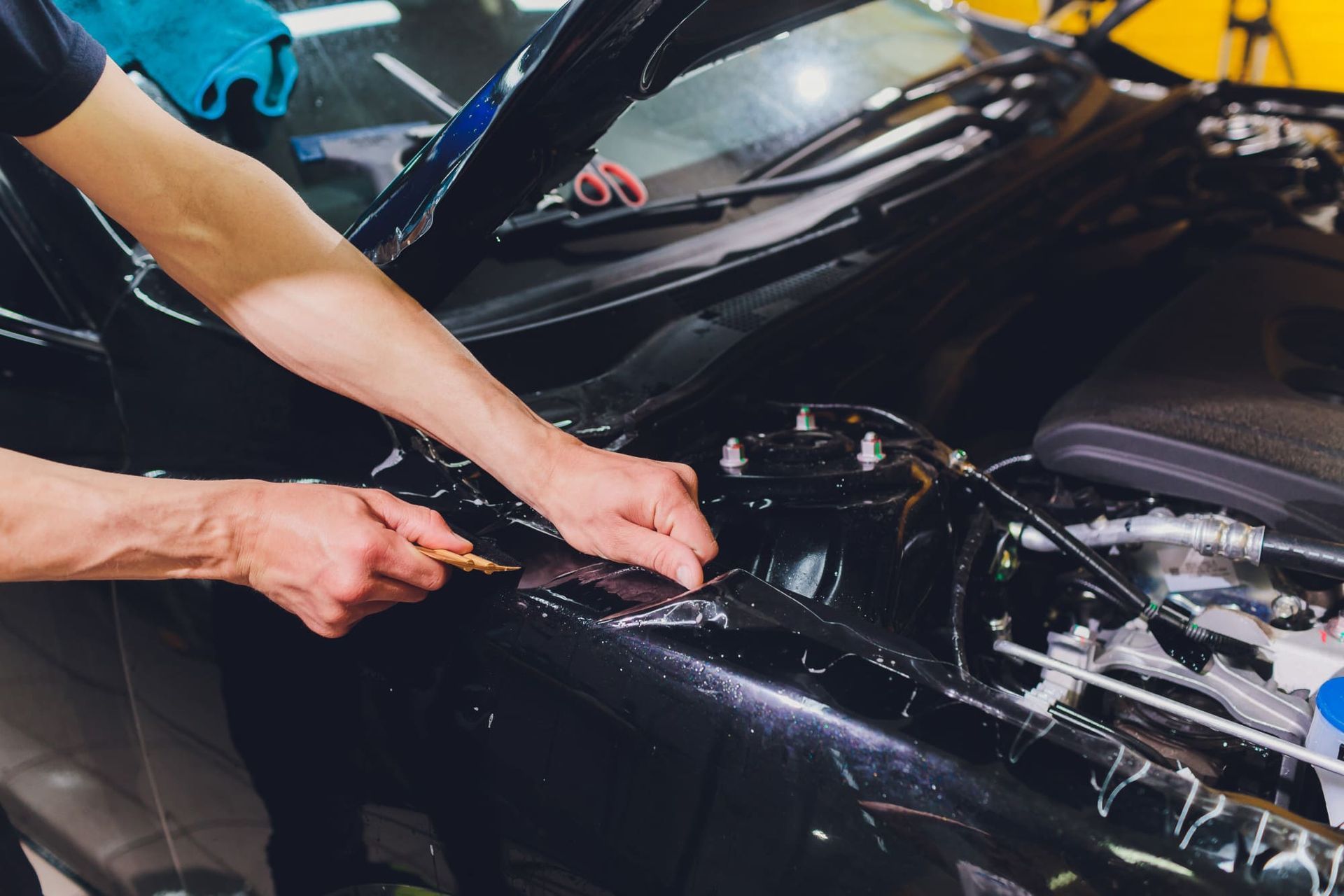
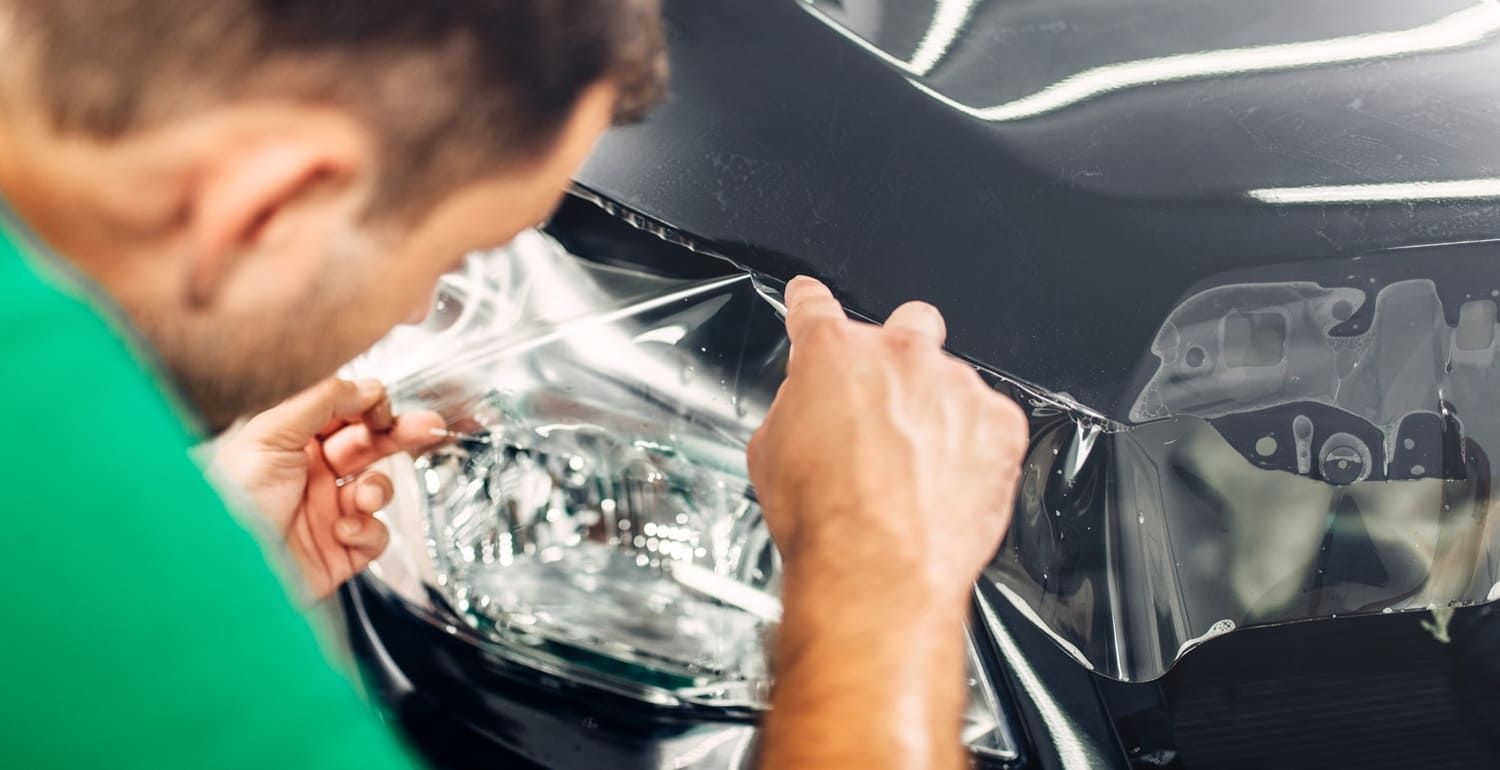
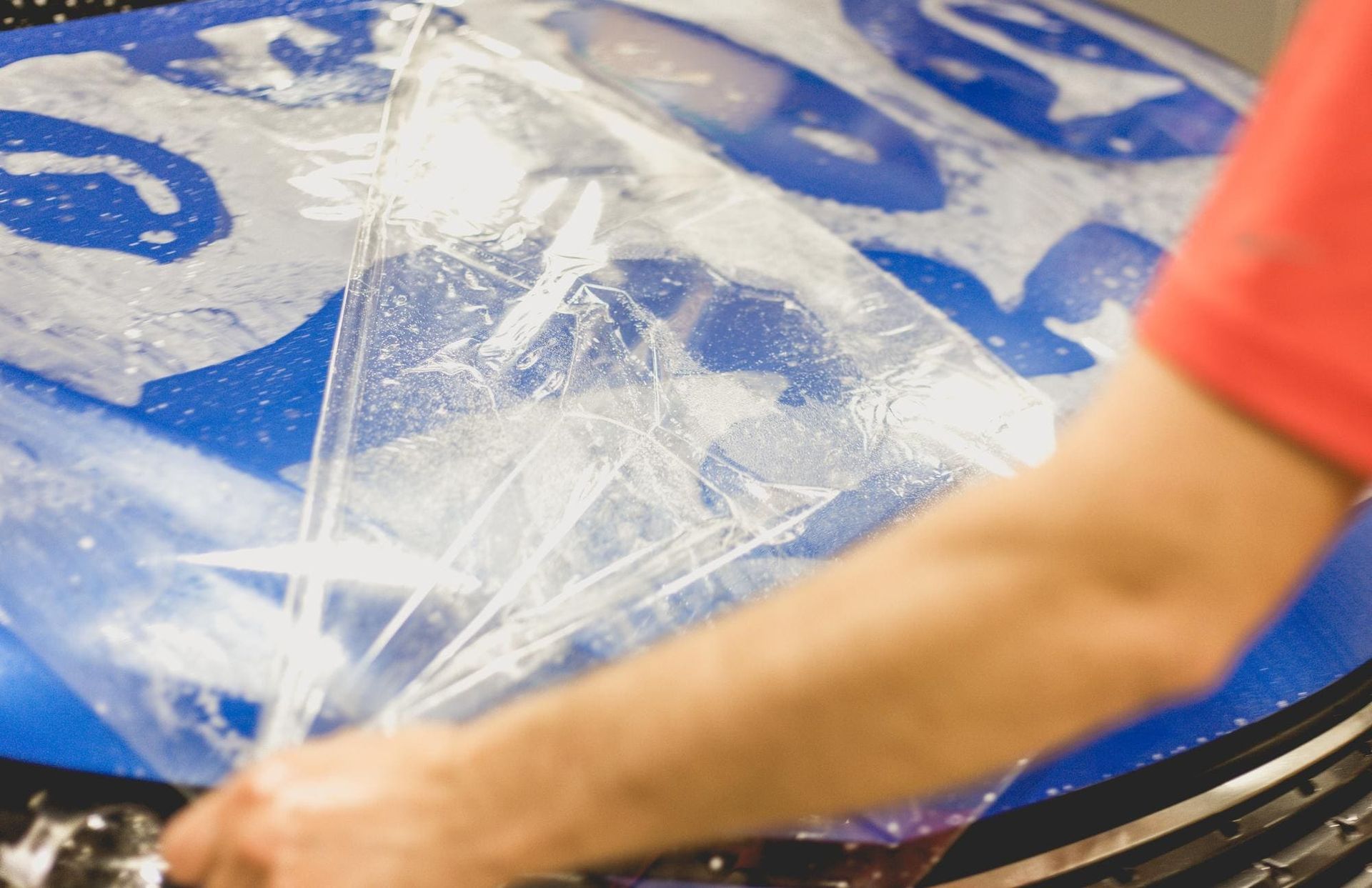
Each piece is custom-cut to match your truck's panels, then applied with a slip solution, positioned, and squeegeed out. The installer stretches and trims the film around curves and edges.
Step 5: Finishing and Cure
Edges are sealed and the truck is inspected under shop lighting. The film needs time to fully cure, so avoid pressure washing for the first several days.
Installation environment matters. Dust, cold, and humidity are the enemies of clean PPF. Solar Shade installs in enclosed, heated, and air-conditioned bays, which matters in an Ohio January. Its glass shop doors also let you watch the work being done.
How to Care for PPF Through an Ohio Winter
PPF needs very little maintenance, but a few habits extend its life:
- Rinse salt off regularly. Even with film on the front, unprotected areas and the undercarriage still need salt removed.
- Wash normally. You can wash a PPF-covered truck just as you normally would, using a pH-neutral soap.
- Keep pressure washer nozzles away from film edges. Hold the wand at least 12 inches back, and don't aim it directly at a seam.
- Wax or coat occasionally. A factory-recommended wax or a ceramic coating keeps the film looking fresh and helps shed grime.
- Let the sun do the healing. Light scratches usually fade on a warm day or with warm water.
Why Work Truck Owners Choose Solar Shade Truck And Car Paradise
Plenty of shops apply film. Fewer understand trucks the way a dedicated truck accessories business does. Solar Shade Truck And Car Paradise has served Warren County, Dayton, Centerville, and Cincinnati since 1979. As Ohio's largest truck and car accessories superstore, it works on pickups every day, from lift kits and wheel-and-tire packages to bumpers, bed accessories, and window tint.
That truck-first experience shows in how PPF is planned and installed. The team knows where lifted trucks take chips, how aftermarket bumpers change coverage, and how to protect a truck that has to keep working. Solar Shade is also Ohio's only LLumar SelectPro and FormulaOne Elite window tinting company, a status earned through strict customer-experience and installation standards. Its film specialists bring the same precision to paint protection.
You'll also get:
- A 6,000-square-foot facility with three large enclosed, climate-controlled bays
- Custom-cut, self-healing, high-gloss paint protection film
- An online paint protection film viewer to compare options before you visit
- Free estimates and available financing
- A team known in its reviews for treating customers like gold
Frequently Asked Questions About PPF for Work Trucks
Is PPF worth it on a work truck?
Yes, if you plan to keep the truck several years or care about resale value. PPF prevents chips that lead to rust under Ohio road salt, and it costs far less than repainting a hood, bumper, or rocker panels.
How long does PPF last on a truck?
Quality self-healing PPF commonly lasts 7 to 10 years with normal care. Trucks that see heavy gravel or job-site use may need high-impact pieces replaced sooner, which is far cheaper than paintwork.
Will PPF stop rock chips completely?
PPF absorbs most rock and gravel impacts that would otherwise chip paint. A very large or sharp object at highway speed can still damage the film, but the paint underneath is usually protected, and a single damaged panel can be re-filmed.
Can PPF be installed on a used work truck?
Yes. The paint should be cleaned and, if needed, corrected first, since PPF seals in whatever is underneath. Existing deep chips should be touched up before film is applied.
Does PPF protect against road salt?
PPF creates a barrier between salt brine and painted surfaces, and it prevents the chips that let salt reach bare metal. You should still rinse the truck regularly to protect uncovered areas and the undercarriage.
Can I put PPF on a lifted truck or aftermarket bumper?
Usually, yes. Lifted trucks often benefit most from rocker panel and lower-door coverage. Aftermarket painted bumpers can typically be filmed, though textured or powder-coated surfaces may need a different solution.
How long does PPF installation take?
A partial front package can often be completed in a day. Full front or full-truck coverage may take one to several days, depending on the truck and prep work needed.
Protect Your Work Truck Before the Next Salt Season
Choosing the best PPF for a work truck in Ohio comes down to a quality self-healing film, smart coverage of the high-impact areas, and an installer who knows trucks. Get those right and your truck can take years of gravel roads, job sites, and salt-covered highways without losing its finish or its resale value.
If you're in Waynesville, Lebanon, Springboro, Centerville, Dayton, Cincinnati, or anywhere in Warren County, stop by
Solar Shade Truck And Car Paradise at 1673 E OH-73 in
Waynesville. You can also
call (513) 897-1364 or request a
free paint protection estimate online. Get your truck covered before the brine trucks roll out, and keep it looking newer longer.